

No products in the cart.
A Journey Through History, Culture, and Breathtaking Landscapes
From a country whose terrain paints a thousand pictures in every season, from a kingdom that embraces the most magnificent Arab oriental traditions, the warmest encounters, and the most delicious Flavors. From a country whose walls draw the stories of history and civilizations. From Morocco, where warm hospitality and authenticity is the standard.
Exploring the Beauty of Morocco
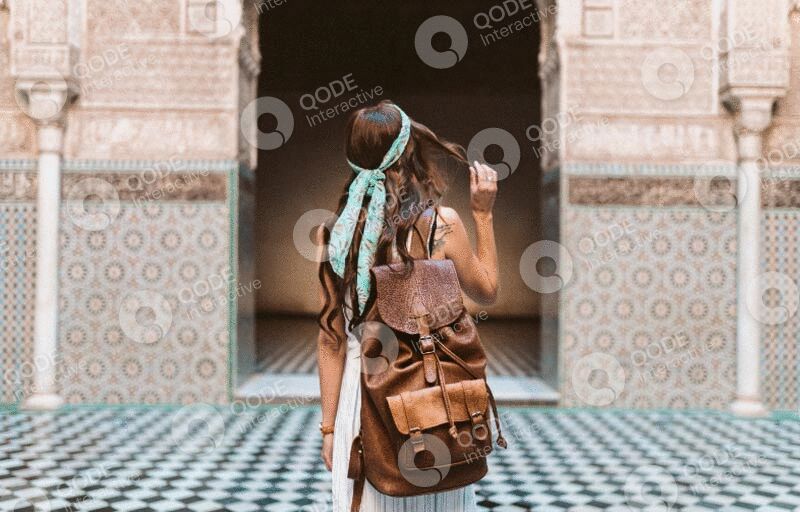
That Arab country captivates you with everything it has to offer: a friendly people, a rich civilization, vibrant culture, and irresistible, enchanting nature. When you spend your vacation in Morocco, you will find everything you seek in this country of unique natural beauty. Morocco has utilized its prime location on the African continent, its openness to the Mediterranean Sea, and its strong roots in the Arab world to become a welcoming host country for tourists of diverse nationalities. It is an Arab country characterized by the diversity of its terrain—from mountains and plateaus to vast seas—which has made it a global tourist destination renowned for its landscapes.
It is a hospitable country in every sense of the word, as I experienced firsthand during my visit. Through my personal interactions with various classes of the Moroccan people, I honestly felt all kinds of generosity and kindness. It is the legendary generosity of Hatim al-Tai, where the poor invite you in before the rich; they are an educated and friendly people. Therefore, we will present to you the most beautiful tourist areas with breathtaking nature in Morocco. From this distinct point in North Africa, we set off on an exploratory journey where the present embraced history, and beauty crowned every space. This journey into the realms of beauty took us to a number of cities and resorts, organized by the National Regional Tourism Office in Abu Dhabi. This trip perfectly summarized the faces, colours, and scents of this beautiful country and showcased the diversity and multiplicity that distinguishes its civilization. Every city has a story, and every story has a place, time, and people. Our journey into Morocco, this beautiful country, began in the city of Rabat, the administrative capital. Through these lines, I hope you will enjoy it as much as I and my media colleagues did.
The Kingdom of Morocco
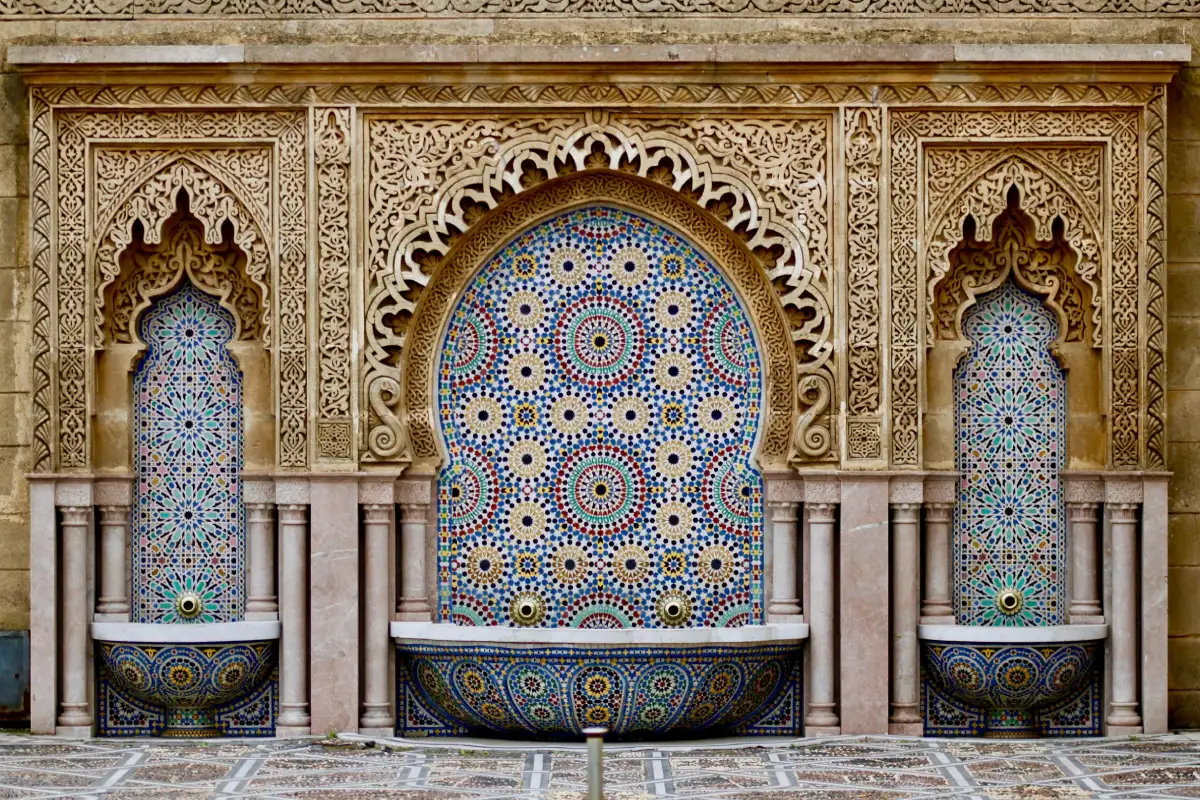
A city that stands with immense greatness and pride, boasting a glorious history and adorned with breathtaking beauty. Chosen as the capital of modern Morocco, Rabat is the royal city and the seat of the government, all central administrative ministries, and embassies. It also hosts the country’s largest university and is bustling with shops, bookstores, cinemas, and theaters. Rabat is distinguished by its lush gardens and squares, surrounded by amazing picturesque landscapes, resembling a crown studded with jewels: vast beaches and soft golden sands. Rabat welcomes its visitors with unparalleled pomp and luxury. It features the spacious Hassan Square, where a 44-meter-tall minaret stands, which was intended to become the largest mosque in the Islamic world during the era of the great Almohad Empire.
Ifrane
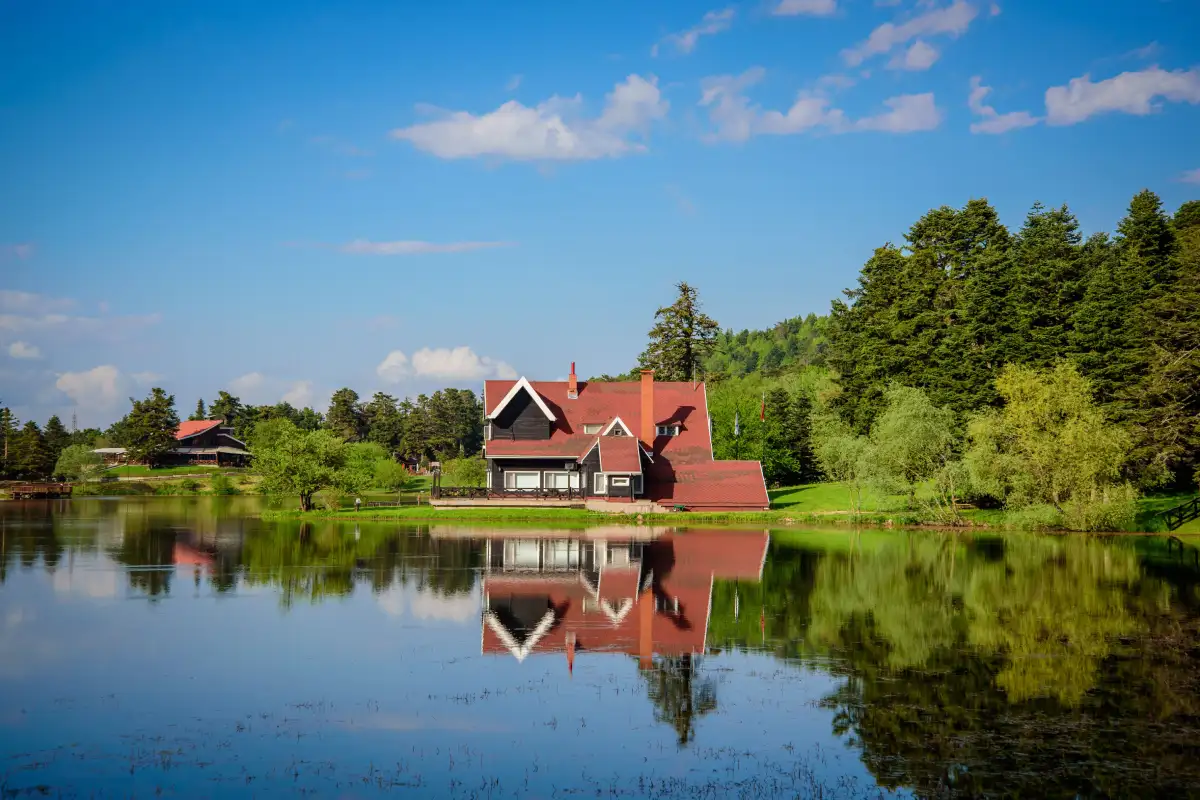
Ifrane, or the “Little Switzerland of Morocco,” located on the Mediterranean mountains, is a major tourist attraction with its waterfalls and breathtaking green nature. Ifrane is characterized by freezing cold and snow covering the slopes of its mountains in autumn and winter, and mild weather in summer and spring. The word “Ifrane” is an Amazigh word meaning “caves,” named so because caves are widely spread in the outskirts of the city. In the past, the city was called “Orti,” a word that also has Amazigh origins, meaning orchard or garden. Currently, the city is nicknamed Little Switzerland because, in addition to its natural beauty, it features an urban design remarkably similar to European cities.
Tourism in Ifrane
Ifrane is considered one of the best tourist destinations characterized by its mild weather, making it a favorite resort for many Moroccan families, whether from the city itself or from hotter regions like Fez and Meknes. Wild hunting enthusiasts also practice their hobby during the autumn in the outskirts of the city. This is not limited to Moroccans, but also includes expatriates from abroad. In winter and autumn, the city witnesses an influx of foreign tourists who come to practice ice skating. There is more than one winter station for this sport, such as the Michlifen station, which provides resorts, restaurants, and training services for beginners in skiing. During the spring, the beautiful city is draped in a green mantle and bright spring colors, while beautiful waterfalls flow vibrantly throughout the area.
Fez
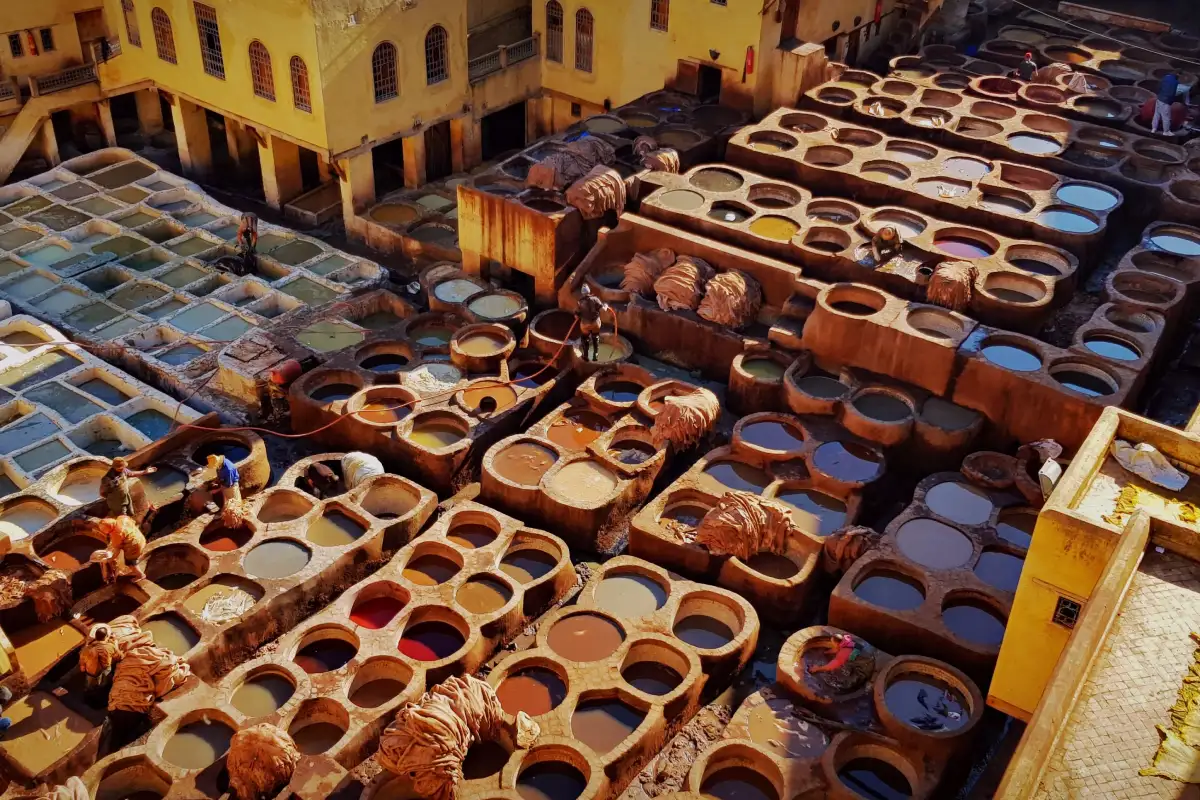
The Moroccan city of Fez is the second largest city in the Kingdom in terms of population, exceeding approximately two million people. It is a historic city that has witnessed much of the country’s history. Its foundation dates back to the eighth century AD, after Moulay “Idriss I” arrived there in 789 AD. The construction of this city began on the right bank of the Fez River in the Andalusians’ neighborhood. It is worth mentioning that Moulay Idriss II managed to build a new city on the left bank of this river in the Kairouanians’ neighborhood, establishing a wall, a mosque, a palace, and a market.
During that era, this city witnessed a distinct urban and economic revival due to the availability of many fertile resources. Its strategic location also made it a crossroads for trade routes between the east and west of the country. It also witnessed a tangible demographic diversity due to the presence of Amazighs, Kaisonians, and Andalusians, all of whom contributed to building this city in all economic, cultural, and urban aspects. This beautiful city experienced another golden age during the Almohad era, who seized the city in 1143 AD under the leadership of Abu Yusuf Yaqub. He managed to build an impregnable fortress for it and a large mosque, in addition to palaces, gardens, and residential units.
If you ever consider visiting this beautiful city, you must make sure to visit its most important cultural and historical landmarks, such as the Al-Qarawiyyin Mosque, which was ordered to be built by Fatima al-Fihriya, and the Andalusian Mosque, ordered by her sister Maryam. You must also see the walls of Fez el-Bali, the Great Mosque, the Nejjarine Funduq and fountain, its Northern Tower, and of course, “Dar Batha,” the royal palace ordered by Moulay Abdelaziz, which was later converted into an art museum.
Chefchaouen
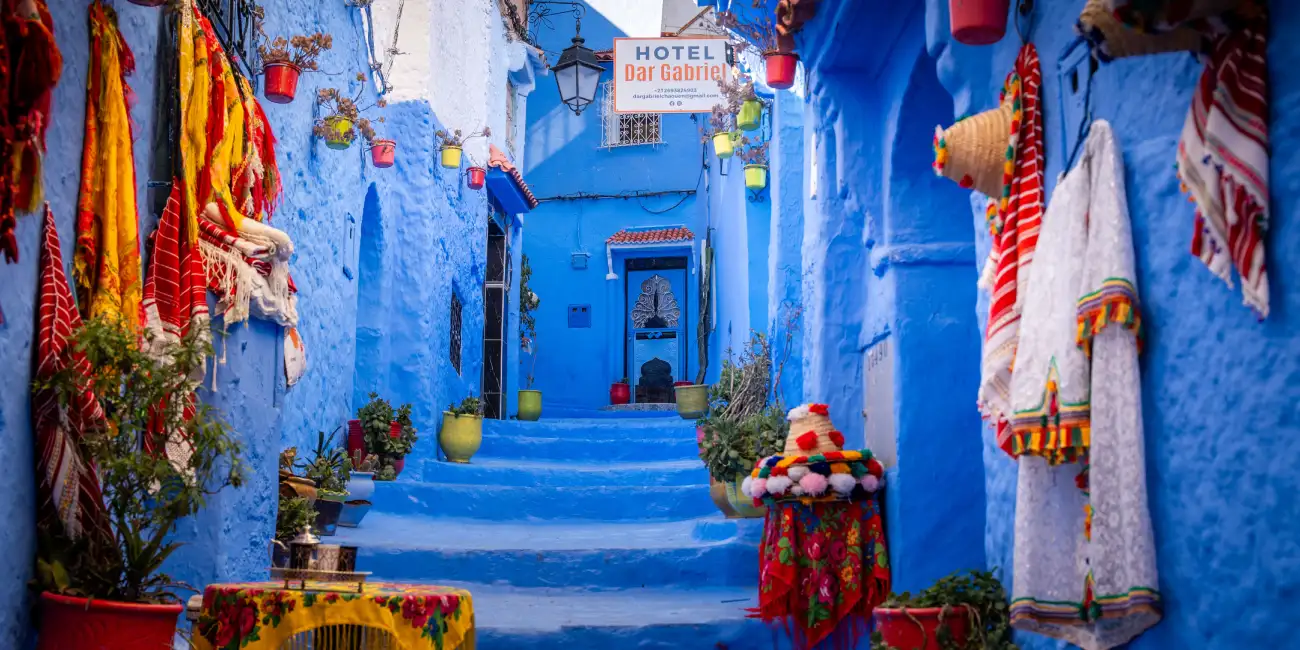
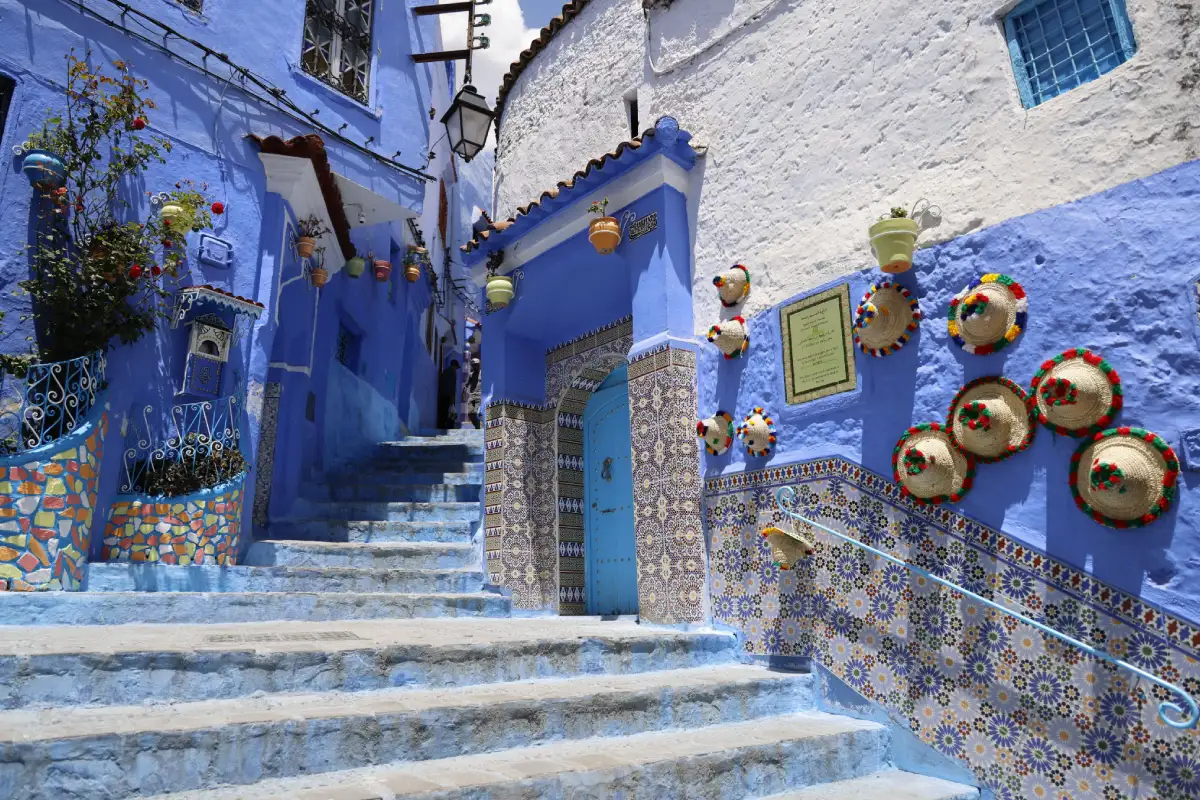
The Blue City, nestled in the embrace of the Rif Mountain range, on the shores of the Mediterranean Sea and close to the Atlantic Ocean. The Moroccan city of “Chefchaouen,” or as its people call it “Chaouen,” stands tall with the magic of its blue color and breathtaking nature, painting a picture that eyes have adored, hearts have longed to see, and feelings have been stirred just by hearing its name. Located in northern Morocco, it covers an area of about 4.20 km² and rises approximately 564 meters above sea level. It was built in 1471 AD by Ali ibn Rashid and contains many tourist landmarks, such as Outa el Hammam square, the Kasbah, the Ras el Maa spring, the Arab Maghreb Street, the Great Mosque, and ancient neighborhoods like the Andalusian neighborhood, the Souika neighborhood, and the Sabbanin neighborhood. This mountainous city, whose name means “the horns” in Amazigh, has difficult terrain, sudden slopes, and low valleys, imposing a special kind of tourism that involves adventure, searching for the new, and discovering beautiful moments.
Tangier
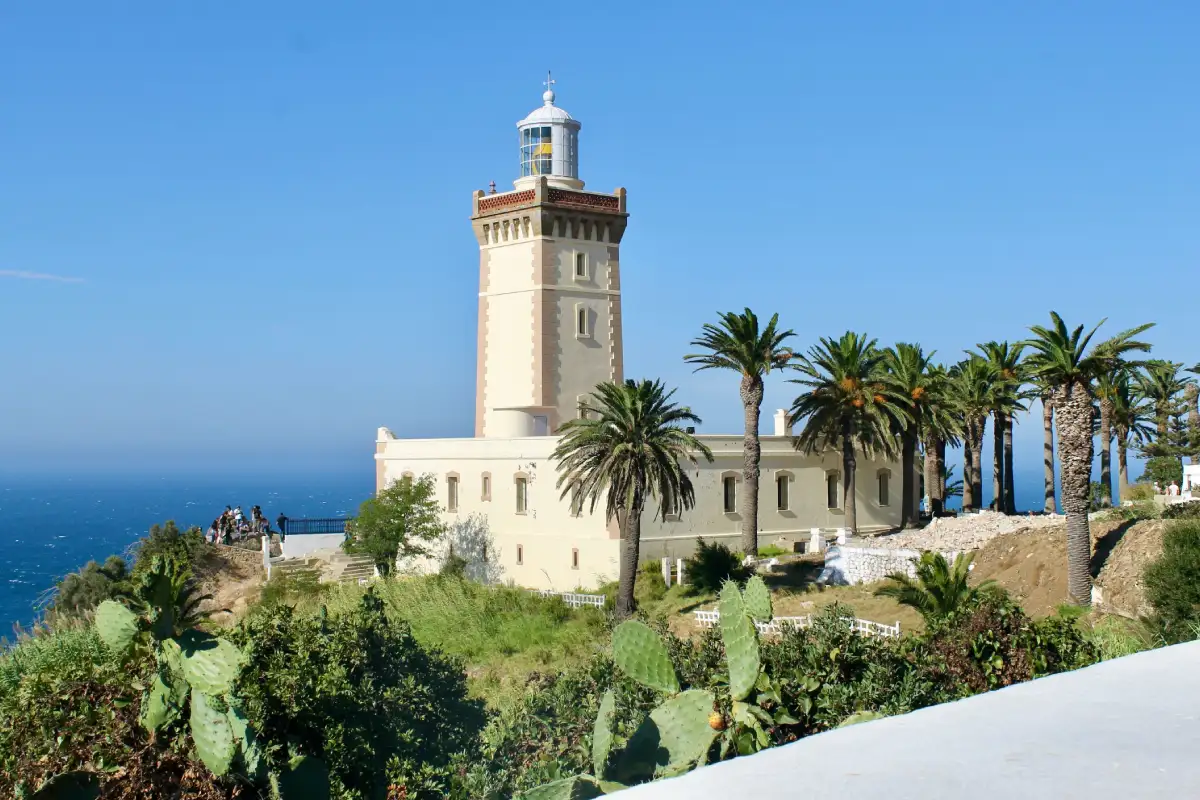
The closest Arab, African, and Islamic city to Europe, which is only 14 kilometers away. Famous for its tourism and the vibrant blending of its cultures, Tangier holds an important position as one of the major Moroccan cities in terms of population and economic, industrial, and cultural activities. Built in 1320 BC, it covers an area of about 124 km². Among its most prominent tourist attractions are: Bab Haha, the Old Medina, the Kasbah, the Caves of Hercules, and the Great Mosque.
It is the inspiring Tangier, which has long been a haven for the hearts of European and American artists, whether they were painters, musicians, writers, or celebrities who lived in Tangier. Indeed, many of those who experienced the magic of Tangier sought it out and entered through its wide gates. When you visit the city in the Grand Socco (Big Market), where you hear the shouts of vendors and the sounds of traditional artisans’ hammers, a captivating musical concert is presented there every morning. And this ringing? It is the brass bells of the water sellers in their colorful, ornamented costumes… It is the distinctive aroma of Tangier.
Leave a Reply